
The Luxury of Not Rushing: Why Slow Travel Is the New Luxury at Sea

A personal view on time, freedom, and the changing meaning of luxury at sea
The strongest luxury experience makes a guest feel welcome everywhere and required nowhere.

I began my career as a young officer aboard cruise ships and later qualified as a Master Mariner. For more than thirty years, cruising and cruise travel have remained a central part of my professional and personal journey.
During that time, I have watched the meaning of luxury cruise travel gradually evolve.
The traditional markers still matter. A beautiful suite matters. So do excellent cuisine, thoughtful service, privacy, space, and access to special destinations. These remain important elements of a luxury journey.
But increasingly, I believe that the deepest luxury is not always found in what is added.
Sometimes, it is found in the pressure that is removed.
Waking without an alarm. Finishing breakfast without checking the time. Staying aboard while others go ashore—or joining them and deciding at your own pace.
It is the feeling that, for a few days, your time belongs to you again.

When time itself becomes a luxury
Most of us live with the feeling that there is never quite enough time.
There are meetings to attend, messages waiting, decisions to make, and places where we are expected to be. Even when we are not technically working, some part of the mind often remains on duty.
Recent research suggests that our well-being depends not only on how much free time we have, but also on how much control we feel over it.
Researchers sometimes describe this as time affluence: the sense that we have enough time, and enough freedom, to use it in ways that matter to us.
Related studies have found that spending money to remove an unwanted task and recover the time it would have taken can sometimes create more satisfaction than spending the same amount on another possession.
Put simply, people are not necessarily asking for empty hours.
They are asking to feel that not every hour has already been spoken for.
This is where luxury has quietly changed shape. It is no longer defined only by what we own, display, or consume. It is increasingly connected to privacy, ease, personalization, and the freedom to establish our own rhythm.
Virtuoso’s 2026 Luxe Report describes a similar shift among luxury travelers: away from the fear of missing out and toward journeys that feel more personal, restorative, and less hurried.
People still want to travel far and see extraordinary places.
They are simply less willing to race through them.
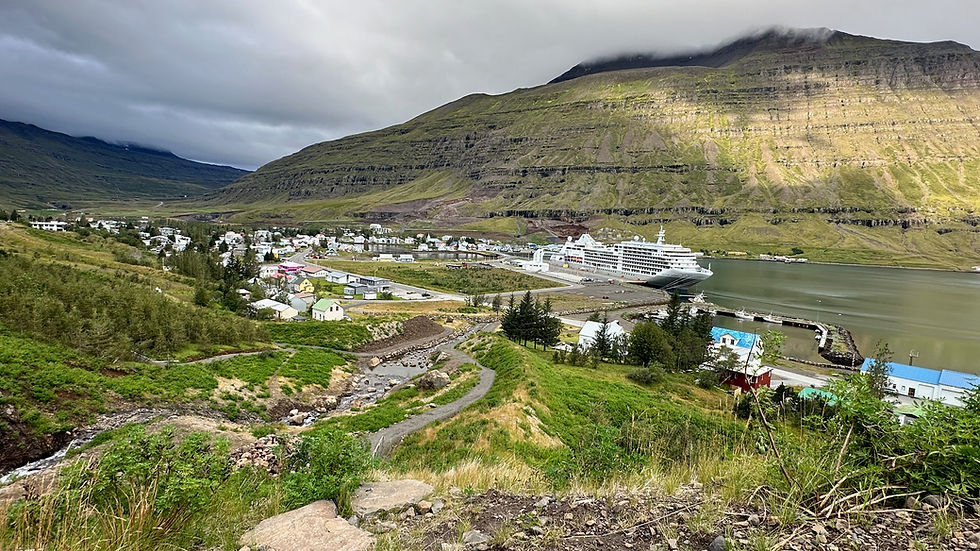
When a vacation becomes another schedule
There is a paradox built into modern travel.
We leave home to escape pressure, and then quietly rebuild a version of it somewhere else.
A list of everything to see. Breakfast, excursions, transfers, restaurant reservations, an evening show—each one booked, each one crossed off, with a low hum of guilt over any hour spent doing nothing.
The vacation becomes another project to manage.
Research into vacation recovery suggests that time away can improve well-being, although the effect is often temporary. Genuine relaxation, mental distance from work, enjoyment, and a sense of control over how the days unfold all appear to influence whether a vacation feels truly restorative.
None of this means that an active journey must be exhausting, or that a relaxing vacation requires a pool chair and nothing else.
A full day can still feel unhurried.
What matters is whether we are choosing what to do, or racing to keep up with what we think we are supposed to be doing.

What slow travel really means
Slow travel is often misunderstood.
It does not necessarily mean remaining in one place for several weeks, covering very little distance, or avoiding anything organized.
At its heart, slow travel is about rhythm.
It means reducing unnecessary transitions, leaving enough time to experience a place, and paying more attention to the quality of a journey than to the number of stops collected along the way.
For me, slow travel has never meant doing nothing.
It means having enough room around an experience to notice it.
A dinner feels different when it is not squeezed between two appointments. A port feels different when you are not checking your watch every fifteen minutes. A conversation develops differently when nobody at the table is already thinking about what comes next.
The objective is not to see less.
It is to stop moving so quickly that very little has time to remain with us.
Why luxury cruise travel can create this freedom
Cruising does something that few other forms of travel can reproduce so naturally:
The journey continues while you slow down.
The ship holds its course while you sleep, read, have dinner, talk, exercise, or simply watch the water go by. Your room travels with you. There is no need to pack every morning, check out of another hotel, arrange another transfer, navigate unfamiliar roads, or search for the next place to stay.
The ship carries the itinerary. You do not have to carry it yourself.
Visiting several destinations during one journey remains one of the main reasons people choose to cruise. Cruise Lines International Association research also identifies something more practical but equally real: the simple relief of unpacking only once.
But the real luxury goes deeper than convenience.
I have experienced it many times aboard Explora Journeys, Oceania Cruises, Crystal, and Silversea, as well as on the rivers with AmaWaterways and Emerald Cruises.
Sometimes it is a quiet afternoon at sea, when the horizon seems almost motionless beyond the deck.
Sometimes it is a late breakfast with no reason to rush the final coffee.
Sometimes it is the decision to remain aboard in port, enjoying a quieter ship while most guests are ashore.
There may be many possibilities available, but none of them feels compulsory.
That distinction matters.
Luxury cruise travel does not necessarily offer fewer choices. It often offers more freedom in deciding how, when, or whether to use them.
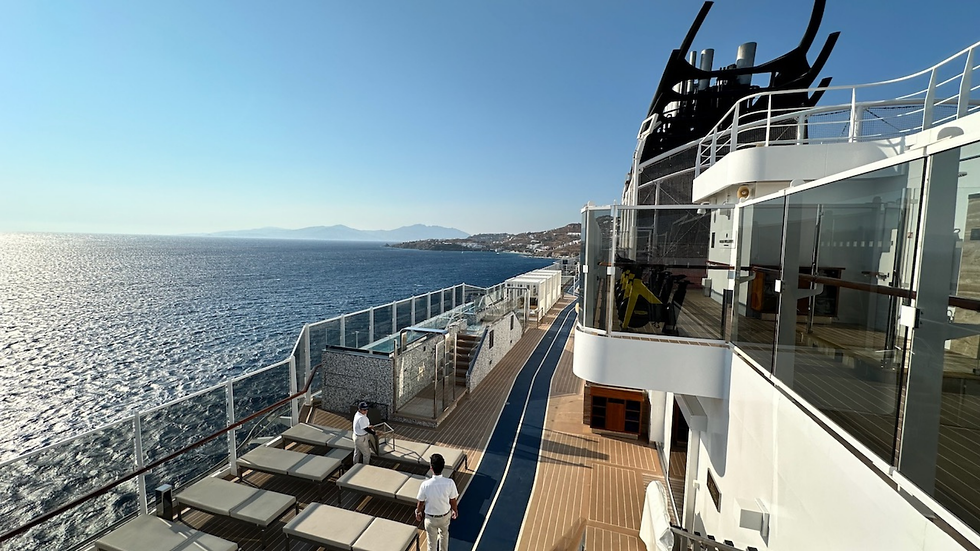
From programmed participation to personal freedom
When I began working aboard cruise ships, the experience was generally more structured.
There was a printed daily program, and guests were often expected to participate. Activities helped create the social rhythm on board, and much of the day was organized for the passenger.
Cruising has since developed in many different directions.
Large contemporary ships now offer an extraordinary range of restaurants, shows, sports, attractions, children’s facilities, and entertainment concepts. For many travelers, this variety is exactly the attraction.
Luxury cruising generally offers a somewhat different proposition.
Not an absence of activity, but a stronger sense of personal freedom.
The evolution has not been from activity to inactivity.
It has been from participation by expectation to participation by choice.
The more inclusive structure of many luxury cruises can also reduce the number of small transactional decisions made throughout the day.
When dining, drinks, service, and a range of experiences are already included, the guest is not continually being asked to decide whether the next restaurant, glass of wine, or activity is worth an additional charge.
This can make the experience feel less commercially interrupted and more complete in itself.
Virtuoso’s research reflects this wider preference for ease. All-inclusive experiences, privacy, and celebration travel feature prominently among the experiences luxury clients increasingly value.
Still, not every luxury cruise is automatically unhurried.
A beautiful ship operating a heavily port-intensive itinerary can still mean early alarms, short calls ashore, tender transfers, and the pressure to make the most of every destination.
The ship may be luxurious.
The rhythm may not be.

The itinerary matters as much as the ship
When I look at a luxury cruise, I rarely begin with the number of ports.
I look at the pacing.
What time does the ship arrive, and when does it leave again? Are sea days included between the more intensive calls? Is there a late departure or an overnight stay? How long does it actually take to travel from the gangway to the place worth seeing? Does every day begin with an early excursion?
Many luxury and river itineraries include longer stays, later departures, or occasional overnights. These details matter more than they may initially appear.
They allow guests to explore without continually calculating how long it will take to return to the ship. They create space for a longer lunch, an evening ashore, or a walk without a fixed destination.
Virtuoso’s recent research notes growing interest among river-cruise travelers in longer port stays, allowing markets, neighborhoods, and local life to be experienced at a more natural pace.
There is also value in deciding not to go ashore at all.
We sometimes treat every day in port as an opportunity that must be taken. But the opposite can also be true.
A quiet ship, an open deck, a long lunch, or an afternoon with nowhere to be can become one of the most memorable parts of the voyage.
A sea day is not an empty space between destinations.
It can be the pause that gives the rest of the journey its shape.
The luxury of not doing everything
Luxury, river, and expedition cruising continue to attract growing interest, with recent Cruise Lines International Association research indicating increasing demand across these segments.
I believe part of that appeal lies in the ability to combine discovery with ease.
Guests can visit extraordinary destinations, enjoy excellent food, meet interesting people, and take part in carefully designed experiences.
But they can also step away.
True luxury is not being offered very little.
It is being offered a great deal without feeling that all of it must be accepted.
There is an important difference between availability and obligation.
The strongest luxury experience makes a guest feel welcome everywhere and required nowhere.
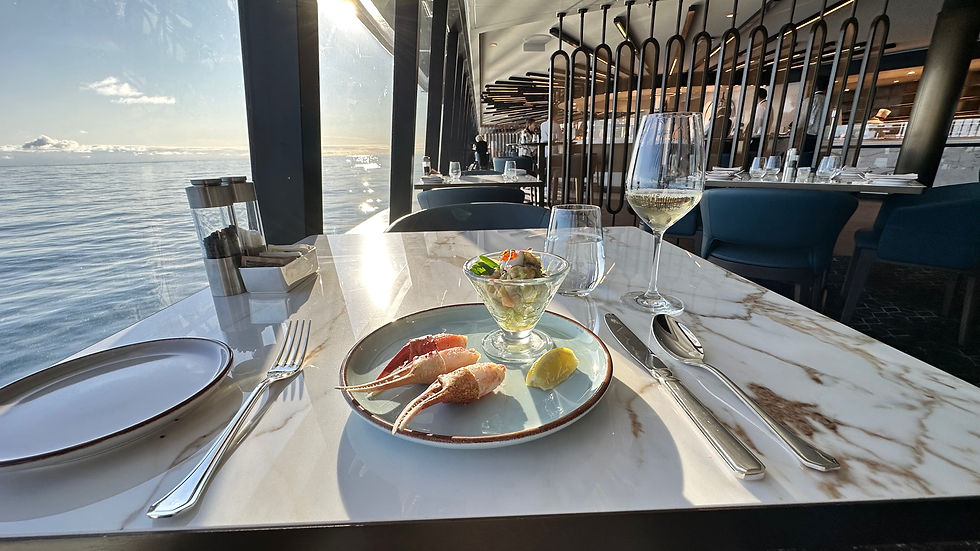
Why open time matters for groups
The same principle becomes especially important when people travel together—as a family, a private group, or a company.
Over the years, I have participated in short management programs lasting two or three days where almost every hour was filled.
There were meetings, presentations, organized meals, transfers, activities, and formal networking moments.
On paper, these programs looked extremely thorough.
In practice, a schedule that full could end up missing part of its own purpose.
Some of the conversations that allow people to truly understand one another do not happen inside a scheduled meeting.
They happen while walking back from dinner, over a second coffee, on a quiet deck, or during an afternoon when nobody is being directed toward the next activity.
That is often where trust begins to develop, common ground is discovered, and potential synergies become visible.
Recent incentive-travel research reflects a similar shift. The 2025 Incentive Travel Index found that free time was growing in importance alongside shared meals, cultural experiences, and relationship-building moments.
For a group at sea, the objective should not be to keep everyone together continuously.
A stronger program is often built around a limited number of meaningful anchor moments: a private welcome, a special dinner, a milestone celebration, a well-chosen shore experience, a meeting, or a sail-away gathering.
Around those moments, people need freedom.
Families can travel together without sharing every interest. Corporate guests can connect without attending meetings throughout the day. Participants can spend time alone and then return to the group with new energy and something new to contribute.
Open time is not the absence of a program.
Used thoughtfully, it is part of the program.

Designing a journey around how people should feel
At Bancosta Cruise, this is where I believe the planning conversation should begin—not with how much can be added to the program, but with how people should feel during the journey.
Should they feel connected? Rewarded? Inspired? Rested? Celebrated? Free?
Only once that is clear should we begin selecting the ship, itinerary, season, shared experiences, private spaces, and the right commercial structure—whether that means a group allocation, a partial charter, a venue buyout, or a full cruise charter.
A strong luxury group journey is rarely the one with the fullest schedule.
It is the one with the right rhythm.
The luxury of not rushing is not about doing nothing.
It is about having enough time and freedom to be fully present in whatever you choose to do.
And perhaps that is the quieter privilege a journey can offer: not simply taking us somewhere new, but giving us back a little control over how we experience the time we have there.
This is what I do at Bancosta Cruise, and it is also my passion: helping families, private groups, and companies create meaningful journeys at sea—experiences that bring people together, leave room to breathe, and remain with them long after the voyage is over.
Would you like to explore what such a journey could look like for your family, group, or event? I would be delighted to help you shape it.


Comments