
Luxury cruise travel in Iceland: what changing plans taught me about groups and events at sea

The ability to turn an operational change into another experience is an important part of successful event planning at sea.
A beautiful itinerary is often the first thing we notice when considering a cruise.
For a private vacation that is understandable. For a corporate incentive, large group or cruise charter, however, I believe we need to look further.
What happens when the itinerary changes?
I was reminded of this during nine days around Iceland aboard Silversea’s Silver Spirit in August 2024. I had been invited by the Silversea Charters & Incentives team to join a seminar at sea together with several incentive houses from the United States.
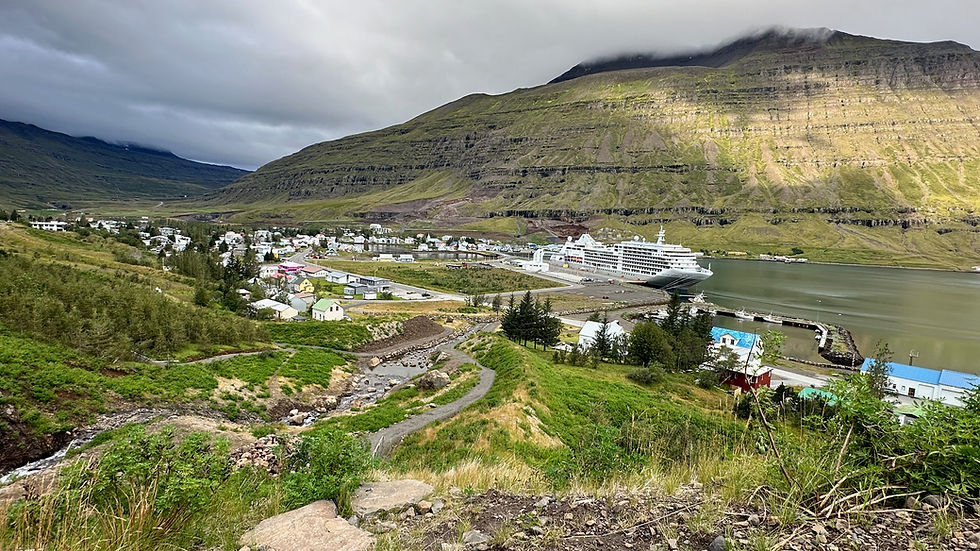
On paper, it was an exceptional program: a luxury ship, some of Iceland’s most dramatic landscapes and a call in the Faroe Islands before returning to Reykjavik.
In reality, two passing storms changed part of our itinerary. We stayed an additional night in Akureyri instead of calling at Húsavík, and later our planned call at Tórshavn in the Faroe Islands was also cancelled.
Towards the end of the cruise, I also became sick and spent considerably more time in my suite than I had expected.
Hardly the perfect journey.
Yet it remains one I remember very positively.
Looking back, the changes also reinforced something I have learned throughout more than 30 years in the cruise industry: when planning a group or event at sea, the itinerary matters enormously, but it should never be considered in isolation.
The ship, the onboard experience, the flexibility of the program and the way unexpected situations are managed can ultimately be just as important.
Why luxury cruise travel works so well in Iceland
Iceland has a particular ability to make you feel close to nature.
The landscapes are raw and dramatic. Glaciers meet volcanic terrain, geothermal areas sit beside waterfalls, and small coastal communities are surrounded by mountains and open sea.
For travelers who enjoy being outdoors, there is an extraordinary range of possibilities: hiking, whale watching, kayaking, horse riding, geothermal bathing, cycling, glacier experiences and excursions through volcanic landscapes.

During my cruise, members of our group experienced far more of these activities than I did because I was working for much of the journey.
Their enthusiasm was difficult to miss.
From an event-planning perspective, I found the contrast particularly interesting.
During the day, participants can leave the ship for an active and sometimes demanding experience in nature. In the evening, they return to a comfortable suite, a hot shower, dinner, drinks and the familiar environment of the ship.
While everyone sleeps, the venue itself moves to the next destination.
That combination can create something very different from a conventional land-based incentive.
It is also why Iceland may work particularly well for companies whose identity connects naturally with adventure, outdoor lifestyles, technical clothing, sustainability, wellness or active travel.
For the right organization, the destination itself becomes part of the storytelling.
However, that does not mean Iceland is suitable for every event.
If the brief calls for guaranteed sunshine, pool parties and a short two- or three-night program, there are obviously better choices.
Many Iceland cruise itineraries are seven nights or longer, and the weather must be treated as part of the experience rather than an inconvenience to be ignored.
Matching the destination to the objectives of the group is therefore essential.
The ship is more than transportation between ports
Silver Spirit was particularly interesting to experience in this context.
At the time of my voyage, the ship accommodated up to approximately 636 guests and offered a surprisingly broad selection of dining and public spaces for a vessel of that scale. She had undergone a major refurbishment and extension in 2018.
My personal impression was of a classic and traditional interpretation of luxury.
I tend today to prefer a somewhat more contemporary and casual style, but that is a question of taste rather than quality. For another group or client, Silver Spirit’s calm atmosphere, intimate scale and traditional service philosophy could be exactly what they are looking for.
That distinction is important when choosing a ship for an event.
There is no universally perfect luxury cruise ship.

A ship that works wonderfully for an established private club or sophisticated multigenerational group may not necessarily be the best fit for a young technology company or an active lifestyle brand.
The personality of the ship should support the personality of the event.
I found the range of venues aboard Silver Spirit useful from that perspective. Different restaurants and lounges allowed groups to change atmosphere throughout the day without leaving the ship.
La Terrazza offered Italian dining, Silver Note combined dining with live music, and Spaccanapoli provided a much more relaxed experience around the pool deck. The Grill was particularly enjoyable in Iceland, where heaters and blankets made outdoor dining possible despite the cold weather.
My own favorite small pleasure was eating a freshly prepared pizza outside while surrounded by Icelandic air.

It sounds simple, but events are often remembered through exactly these moments.
Silver Spirit was also highly inclusive, with meals, beverages and many onboard services already part of the cruise experience. For an organizer, this can make budgeting and guest management substantially easier than repeatedly asking participants to sign bills or consider individual expenses.
That sense of simplicity is one of the practical advantages of luxury cruise travel for groups.
When Iceland changed our plans
The most useful lesson from the journey came when the weather deteriorated.
Our planned call at Húsavík could not take place, so we remained for an additional overnight in Akureyri.
Later in the voyage, storm conditions also prevented our call at Tórshavn in the Faroe Islands.
For an individual traveler, a cancelled port can already be disappointing.
For an event organizer, the implications can be greater.
Perhaps an excursion has been designed as the highlight of the program. A private activity may have been arranged months in advance. Internal communications may have built expectations around a particular destination.
And suddenly that destination disappears.
This is where realistic planning becomes important.

I spent part of my early career navigating ships, and one thing never changes: however beautiful the suites, restaurants and lounges may be, a cruise ship remains a ship.
Wind, waves, port limitations and other operational considerations can alter even a carefully planned itinerary.
Safety has to come first.
During our voyage, I appreciated the way the Captain communicated the reasons for the changes. Clear communication does not remove disappointment, but it helps guests understand what is happening and why.
For organizers, there is also a broader lesson.
When evaluating a cruise program, I always believe it is worth asking not only, “How attractive is this itinerary?” but also, “What happens to our event if one important call disappears?”
That question changes the way we look at the ship.
Does the vessel have enough attractive public areas to accommodate an unexpected additional day aboard?
Can meetings, presentations or social activities be moved?
Can the program be adapted without making guests feel that they have simply lost something?
Are there alternative experiences in the port where the ship may remain longer?
In our case, losing Húsavík meant gaining more time in Akureyri.
It was different from what had been planned, but it was not necessarily wasted time.
The ability to turn an operational change into another experience is an important part of successful event planning at sea.
Planning groups around flexibility rather than perfection
This is particularly relevant when considering a full cruise ship charter.
A charter provides enormous freedom.
Depending on the ship, itinerary and operational possibilities, the organizer can influence branding, entertainment, food and beverage concepts, shore activities, meeting programs and the overall rhythm of the voyage.
But a charter does not create immunity from weather.
It is therefore useful to design a program with enough flexibility that the success of the event does not depend entirely on one port or one excursion.
The same principle applies to large groups traveling aboard a regular cruise departure.
A strong program should have several layers: the destination, the ship, the social experience and the activities organized specifically for the group.
If one layer changes, the others can still carry the experience.
This may sound obvious, but it is sometimes forgotten when an itinerary looks spectacular in a presentation.
Iceland is a perfect example.
The destination offers enormous visual impact and potentially exceptional team-building opportunities, but it also asks organizers and participants to arrive with the right expectations.
Warm layers, waterproof technical clothing and good footwear are essential even in summer. During our August voyage we experienced temperatures down to around 4°C, together with rain and strong winds.
That weather can actually become part of the adventure if guests are properly prepared.
Without the right communication before departure, the same conditions may simply feel like bad luck.
Expectation management starts well before embarkation.

A pre-cruise night can also become part of the event
I arrived in Reykjavik the evening before embarkation, something I generally recommend whenever schedules allow.
There is an operational reason for this: flying in on the day of embarkation unnecessarily increases exposure to flight delays and missed connections.
But there is also an experiential reason.
That evening became one of my favorite memories of the journey.
My taxi driver recommended Apotek Kitchen + Bar in central Reykjavik, where I enjoyed an excellent seven-course dinner and beautifully crafted cocktails.
The following morning, I had time to walk through the city before taking the short drive to the ship.
For a group program, a pre-cruise night can similarly serve several purposes.
It gives guests time to arrive from different locations, reduces pressure on embarkation day and creates an opportunity for an opening dinner or informal gathering before the cruise itself begins.
Reykjavik works particularly well in this respect because of its connections with major European and North American markets.
The cruise does not necessarily need to begin at the gangway.
Sometimes the first evening ashore can establish the tone for everything that follows.

When I became the guest who could not follow the program
During the final days of my cruise, the unexpected element became more personal.
I developed a fairly unpleasant cold.
Nothing serious, but enough that I preferred to stay away from the rest of the group and other guests.
Suddenly Iceland effectively disappeared from my own program.
I spent much of my time in my suite, working, resting and using complimentary in-room dining.
And strangely, this was when I appreciated some aspects of the luxury product most.
My suite was comfortable, food arrived when I needed it, and my butler was exceptional.
I have always been quite open that personally I do not require a formal butler service to consider something luxurious. I enjoy a more casual interpretation of luxury.
But the butler looking after me aboard Silver Spirit was outstanding.
He anticipated small things without being asked and paid attention to details I still remember today.
This experience reinforced another point that is relevant for group organizers.
Not every participant will follow every element of the program.
Someone may become tired, unwell, need to work, skip an excursion or simply want a few hours alone.
The onboard product should still work for that person.
A ship used for an incentive or corporate event is not merely a platform for the scheduled activities. For several days, it becomes the participants’ hotel, restaurant, meeting place, social environment and retreat.
The quality of that environment matters.
Sometimes you understand the quality of hospitality even more clearly when you actually need it.

Choosing the right ship, destination and program
Would I recommend Iceland for a luxury cruise group or event?
Absolutely — for the right group.
It is distinctive, adventurous and visually extraordinary. It offers activities that can create real shared experiences rather than simply filling an itinerary.
But I would not recommend it automatically.
The program length, climate, activities, profile of the participants and objectives of the event all need to fit.
The same applies to choosing the ship.
Silver Spirit offered a classic luxury experience with excellent service and an intimate atmosphere. Another client might prefer the architecture and more contemporary design philosophy of a newer generation of luxury vessels.
Neither choice is inherently better.
The important question is whether the combination of ship, destination and program makes sense for the people who will actually be there.
That is ultimately how I approach cruise group planning and cruise charters.
Not by starting with a particular ship simply because it is available, or with a destination because it photographs beautifully, but by understanding what the organizer wants the guests to experience.
Then we work backwards.

The itinerary is the beginning, not the whole experience
Two years later, I still feel that I have unfinished business with Iceland.
I saw much less of the country than I wanted. We lost two planned calls. I spent much of the cruise working and then finished the journey with a cold.
Yet I remember it with a smile.
I remember the landscapes, the cold Icelandic air, an unexpected extra night in Akureyri, dinner in Reykjavik before embarkation, excellent service aboard Silver Spirit and watching members of our group return from their adventures genuinely excited about what they had experienced.
Perhaps that is also a useful definition of a successful group journey.
It does not necessarily mean that every element happened exactly as it appeared on the original schedule.
It means that the overall experience was strong enough to remain memorable even when something changed.
For event organizers, incentive houses and group planners considering luxury cruise travel, that may be one of the most important advantages of choosing the right ship.
A great itinerary attracts attention.
A well-designed experience survives when the itinerary changes.
At Bancosta Cruise, we work with companies, event planners, travel professionals and private groups considering luxury cruise groups, corporate incentives and full cruise ship charters. Our role is not simply to find a ship, but to help determine which ship, itinerary and operating concept best fit the objectives of a particular program.
If you are considering an event at sea, a large group journey or would like to understand what it takes to charter a cruise ship, we would be pleased to explore the possibilities with you.
Luxury cruise travel is not only my profession. It is one of my greatest personal passions. Helping you and your group create meaningful and unforgettable memories at sea is both my joy and my commitment.


Comments